
The Fear That Keeps Most People From Ever Calling Themselves an Author

You know that feeling that hits right around the second beer?
You’re sitting there thinking about the book you’ve been meaning to write for three years. The one that would finally position you as the expert. The one that could become a real lead magnet instead of another forgotten PDF. The one your kids or grandkids might actually hold someday. And then the voice shows up.
“What if it sounds like AI?”
“What if Amazon flags it?”
“What if people can tell and they laugh?”
I’ve heard that voice more times than I can count. And here’s the pattern I keep seeing on X and in real conversations with people who actually ship books: the ones who never publish are the ones who let that voice win.

Amazon’s current KDP rules in 2026 are straightforward. You can publish AI-generated text and images. You simply disclose it when the content was created by AI. If you wrote the core content and only used AI to assist with structure, editing, or brainstorming, you don’t even need the checkbox. The royalty rate stays the same either way. Multiple independent 2026 analyses of Amazon’s Help Center confirm this distinction between AI-generated and AI-assisted content.
What actually kills books right now isn’t the disclosure box. It’s thin content that feels like it was generated in five minutes and never touched by a human who cared. The market is crowded. Self-published titles with ISBNs jumped more than 38 percent in 2025 alone. Revenue per book has dropped in most genres. The people making real money are the ones who treat the AI draft as a starting point and then put their own stories, their own voice, and their own judgment on top of it.
I watched a guy on X post that he published his first kids’ book using AI illustrations because he can’t draw and wasn’t about to pay illustrator rates. He was proud of it. Another person got the classic “AI slop” one-star from someone who never even read the story. She kept going. Her second book is almost finished. That pattern shows up again and again.
The fear is real. The solution is not to avoid the tools. The solution is to use a system that already aims for human-sounding writing, generates matching illustrations instead of random stock, and hands you a KDP-ready file so you’re not fighting formatting for three weeks. Then you go in and add the one thing only you can add: the stories that make it yours.
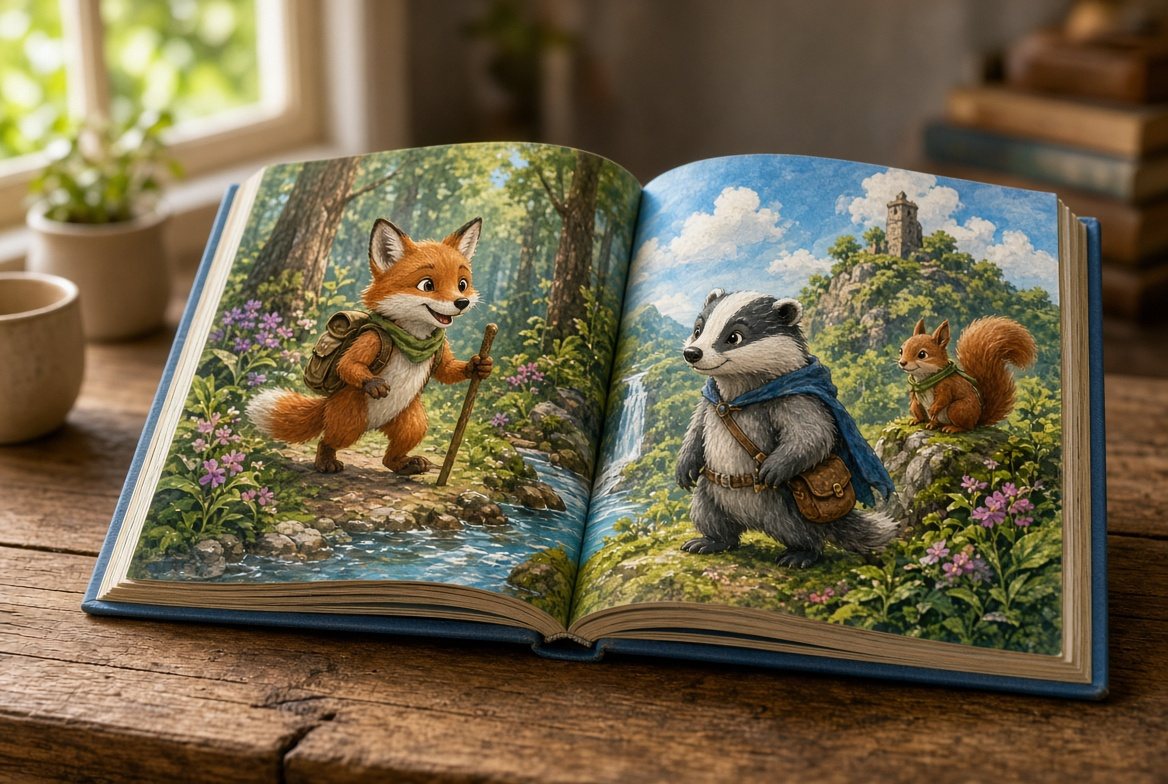
That’s the difference between “I tried AI once and it felt fake” and “I published three short illustrated books this quarter and they actually feel like me.”
You don’t have to become a different person. You just have to stop letting the fear of looking like a robot keep you from ever putting your name on the cover.